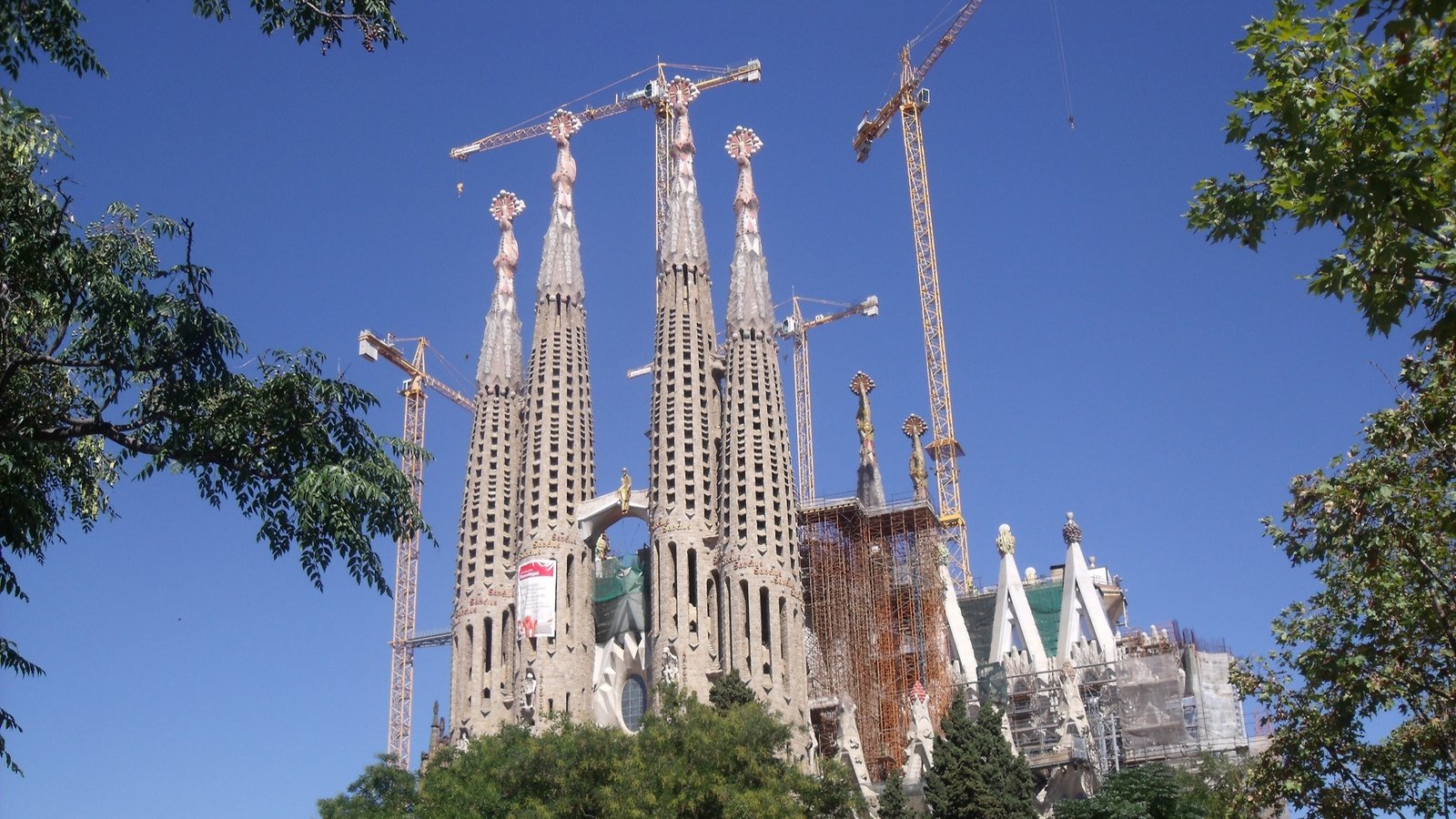
The Sagrada Familia has been under construction since 1882, and it still isn’t finished. That’s not a warning sign, it’s the whole point: Antoni Gaudí’s basilica is built entirely from ticket sales and donations, no public money, which is part of why it’s taken this long and part of why it feels different from every other church you’ll walk into in Barcelona. It’s the most visited monument in Spain, and 2026 marks a century since Gaudí died, so demand for tickets and especially the towers is running higher than a normal year.
There’s no physical ticket office at the basilica anymore. Every visit starts online, tied to a specific date and entry window, and that window is enforced: turn up for a later slot and you walk in fine, turn up late for yours and you may not get in at all that day. Booking ahead isn’t a nice-to-have here, it’s how you actually get inside.
🔍 How this guide works: Tower heights, step counts, and the booking process below come from verifying the basilica’s own visitor information, cross-checked against independent travel coverage. We don’t print specific prices or claim a rating here, since both change and neither is ours to promise; check the live Tiqets listing for current ticket types and cost before you book.
Why Book Sagrada Familia Tickets Before You Land
Every ticket is nominative and timed, and it can’t be changed once you’ve bought it, so the date and window you pick is the one you’re locked into. Basic entry tends to have more availability day to day, but tower access sells out much faster: it’s a separate, smaller allocation on top of general entry, and only one tower is offered per visit, not both. In 2026’s centenary year, tower slots in particular are going earlier than usual, sometimes weeks ahead in the busier months.
Even with a booked slot, plan for a short security line at the door: bags go through an X-ray machine and you walk through a metal detector, the same as airport screening. Leaving backpacks, suitcases, food, and drink behind speeds this up considerably. Bring something to cover your shoulders and knees, since swimwear, see-through clothing, and hats (outside of religious or medical reasons) aren’t allowed inside.
Which Tower to Climb: Nativity vs. Passion
Nativity Facade Tower
The older, finished facade, facing toward the sea. Its tower is shorter than the Passion tower, but the staircase down is somewhat wider, and you’re looking at Gaudí’s original stonework rather than a facade still mid-build. It’s the more forgiving pick if tight spiral stairs aren’t your thing, and it’s usually the one first-time visitors choose.
Passion Facade Tower
Taller, and it faces the sunset and the Montjuïc hill instead of the water. This facade is still an active construction site, so parts of the view can include scaffolding or cranes depending on what’s being worked on that season. The descent is a narrower spiral with more steps than the Nativity side, so it suits visitors who don’t mind a longer, tighter staircase in exchange for the extra height and the sunset-facing angle.
Both towers work the same way mechanically: an elevator takes you up, and you come down a narrow spiral staircase on foot, several hundred steps either way. Children under six aren’t allowed on either tower, and anyone uneasy in tight, enclosed stairwells should probably stick to the basilica floor instead.
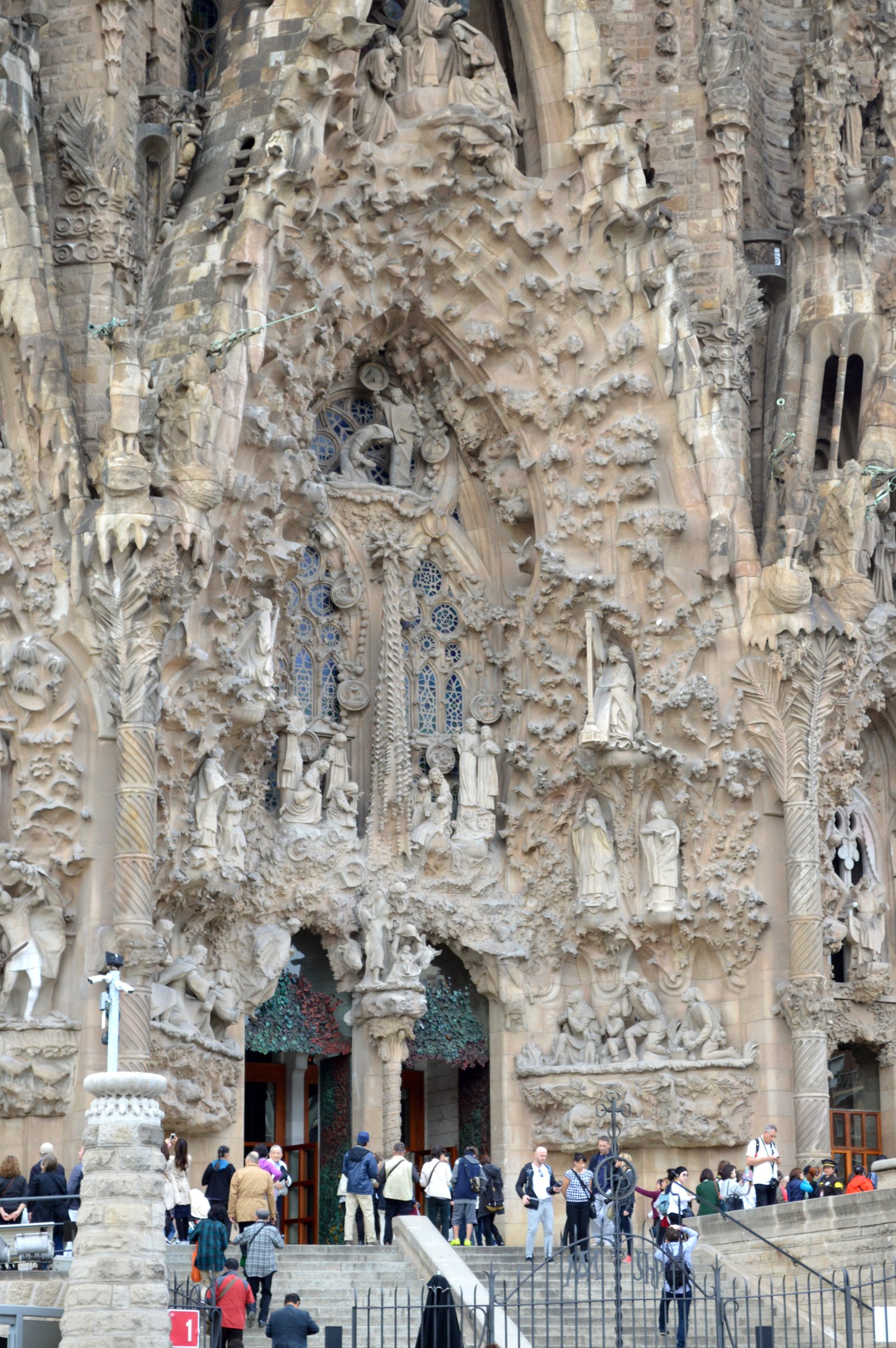
Stone carving on the Nativity Facade’s Portal of Charity, the side most tower visitors climb. Image by DimiTalen on Wikimedia.
Best Time to Visit (and Why It Matches Your Tower Choice)
Gaudí designed the stained glass with the sun in mind, not just the view. Windows on the Nativity, sea-facing side run in cool blues and greens, and they catch the light in the morning. Windows on the Passion, sunset-facing side run in warm oranges and reds, and they light up in the afternoon. So a morning basilica visit and a Nativity tower climb share the same cool, calm light, and a late-afternoon visit paired with the Passion tower shares the same warm, dramatic one. Neither combination is wrong, but picking a time and a tower that match each other gets you a more coherent visit than picking each separately.
Early morning, shortly after opening, is the quietest window of the day and pairs with that blue-green light. Late afternoon, especially after the middle of the day has cleared out, brings noticeably smaller crowds along with the warm western light. Midday is the busiest stretch and the one with the least dramatic interior lighting either way.
How Booking Through Tiqets Works
Tiqets sells tickets for the Sagrada Familia and a long list of other attractions worldwide, and the mechanics are the same regardless of which one you book. You pick a date and time slot, pay, and get a mobile ticket with a QR code straight to your email or the Tiqets app, nothing to print and nothing to pick up at a counter beforehand. At the entrance, that QR code is what gets scanned.
Confirmation is instant rather than something you wait on, so you know your slot is locked in the moment you finish booking. Most Tiqets bookings also come with free cancellation up to a set cutoff before the time slot, which matters for an itinerary that might still shift; the exact cutoff is listed on the attraction’s own page, so check it there before you book if your plans aren’t fully settled yet.
The Sagrada Familia is one of several Gaudí buildings in the city with UNESCO World Heritage status, and it’s worth treating the others as separate outings rather than trying to fold them into the same day. Park Güell, across town, runs its own timed-entry system with its own booking window, and between travel time and the walking involved, it’s a poor fit for the same day as a tower climb. Casa Batlló and Casa Milà (also known as La Pedrera) sit closer together in the Eixample district and pair well with each other on a lighter day, each with its own separate ticket. A realistic Gaudí itinerary spreads across two or three days rather than one packed one.
Frequently Asked Questions
Can I still buy Sagrada Familia tickets at the door?
No, the basilica no longer has a physical ticket office. Every visit, basic entry or tower access, has to be booked online in advance and tied to a specific date and time window.
Which tower should I choose, Nativity or Passion?
Nativity is shorter, finished, sea-facing, and has a somewhat wider staircase down, which makes it the easier first-time pick. Passion is taller, still under construction, faces the sunset, and has a longer, narrower descent. Neither is the wrong choice, it comes down to whether you want the calmer option or the extra height and view.
Can I visit both towers on the same ticket?
Only one tower is included per visit. A combined both-towers option exists but is limited and tends to sell out far earlier than single-tower tickets, especially in a busy year like 2026.
Is there an age limit for the tower climb?
Children under six aren’t permitted on either tower, since the descent is on foot down a narrow spiral staircase with no elevator down. Anyone uneasy in tight, enclosed stairwells should consider skipping the towers and enjoying the basilica floor instead.
Is an audio guide included?
Yes, a downloadable audio guide comes with entry, available for visitors older than about eleven, accessed through a link on your digital ticket.
What should I wear, and what can I bring?
Cover your shoulders and knees; swimwear, see-through clothing, and hats (outside religious or medical reasons) aren’t allowed inside. Leave backpacks, suitcases, food, and drink behind if you can, since everyone passes through airport-style security at the entrance regardless of ticket type.
This site is reader-supported and may earn a commission on qualifying bookings or purchases made through our links, including as an Amazon Associate. Prices and availability shown by our partners are always current on their own site; check the live listing before buying.